 Access is granted on a per-request basis after manual review by Bagel Labs.
Each request is reviewed individually. Typical turnaround is 2-3 business days.
extra_gated_button_content: "Acknowledge license and request access"
extra_gated_prompt: >
By requesting access, you agree to abide by the license and Bagel Labs
acceptable use policy. These model weights are released for research and
evaluation. Commercial use is not granted by default and requires written
agreement with Bagel Labs.
extra_gated_fields:
Full name: text
Affiliation: text
Affiliation type:
type: select
options:
- Academic / university
- Industry research lab
- Startup
- Large company
- Independent researcher
- {label: Other, value: other}
Company or institution website: text
Job title or role: text
Country: country
Intended use (1-2 sentences): text
Will the model be used in a commercial product or service?:
type: select
options:
- "No, research and evaluation only"
- "Possibly in the future"
- "Yes"
Are you following @bageldotcom on Hugging Face?: checkbox
Email used for this request matches my official affiliation domain: checkbox
I agree to the license and the acceptable use policy: checkbox
---
Access is granted on a per-request basis after manual review by Bagel Labs.
Each request is reviewed individually. Typical turnaround is 2-3 business days.
extra_gated_button_content: "Acknowledge license and request access"
extra_gated_prompt: >
By requesting access, you agree to abide by the license and Bagel Labs
acceptable use policy. These model weights are released for research and
evaluation. Commercial use is not granted by default and requires written
agreement with Bagel Labs.
extra_gated_fields:
Full name: text
Affiliation: text
Affiliation type:
type: select
options:
- Academic / university
- Industry research lab
- Startup
- Large company
- Independent researcher
- {label: Other, value: other}
Company or institution website: text
Job title or role: text
Country: country
Intended use (1-2 sentences): text
Will the model be used in a commercial product or service?:
type: select
options:
- "No, research and evaluation only"
- "Possibly in the future"
- "Yes"
Are you following @bageldotcom on Hugging Face?: checkbox
Email used for this request matches my official affiliation domain: checkbox
I agree to the license and the acceptable use policy: checkbox
---


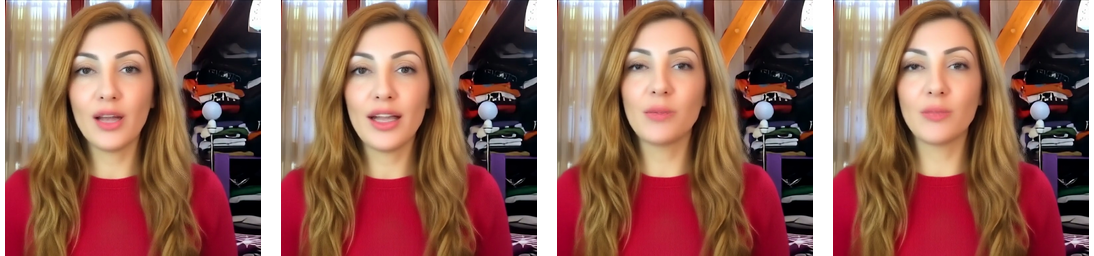
Prompt: A woman with long, blond, wavy hair is speaking directly to the camera.
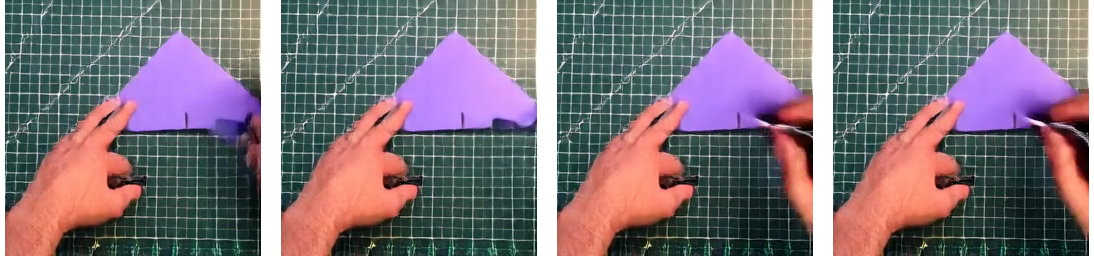
Prompt: A person's hands perform a paper-folding craft on a green cutting mat.
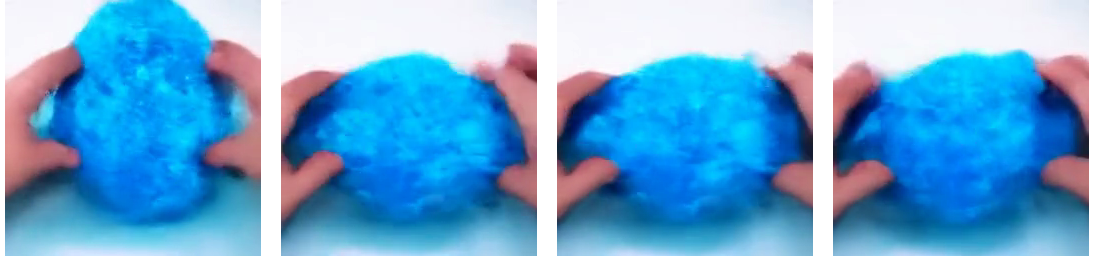
Prompt: A pair of hands interacts with translucent blue slime.
# Results In a low-resolution text-to-video study, Paris 2.0 is compared against a monolithic model trained on the same data under a matched total compute budget. The decentralized model reduces FVD from 561.04 to 279.01 and improves CLIP text-video similarity and aesthetic score under the same generation protocol.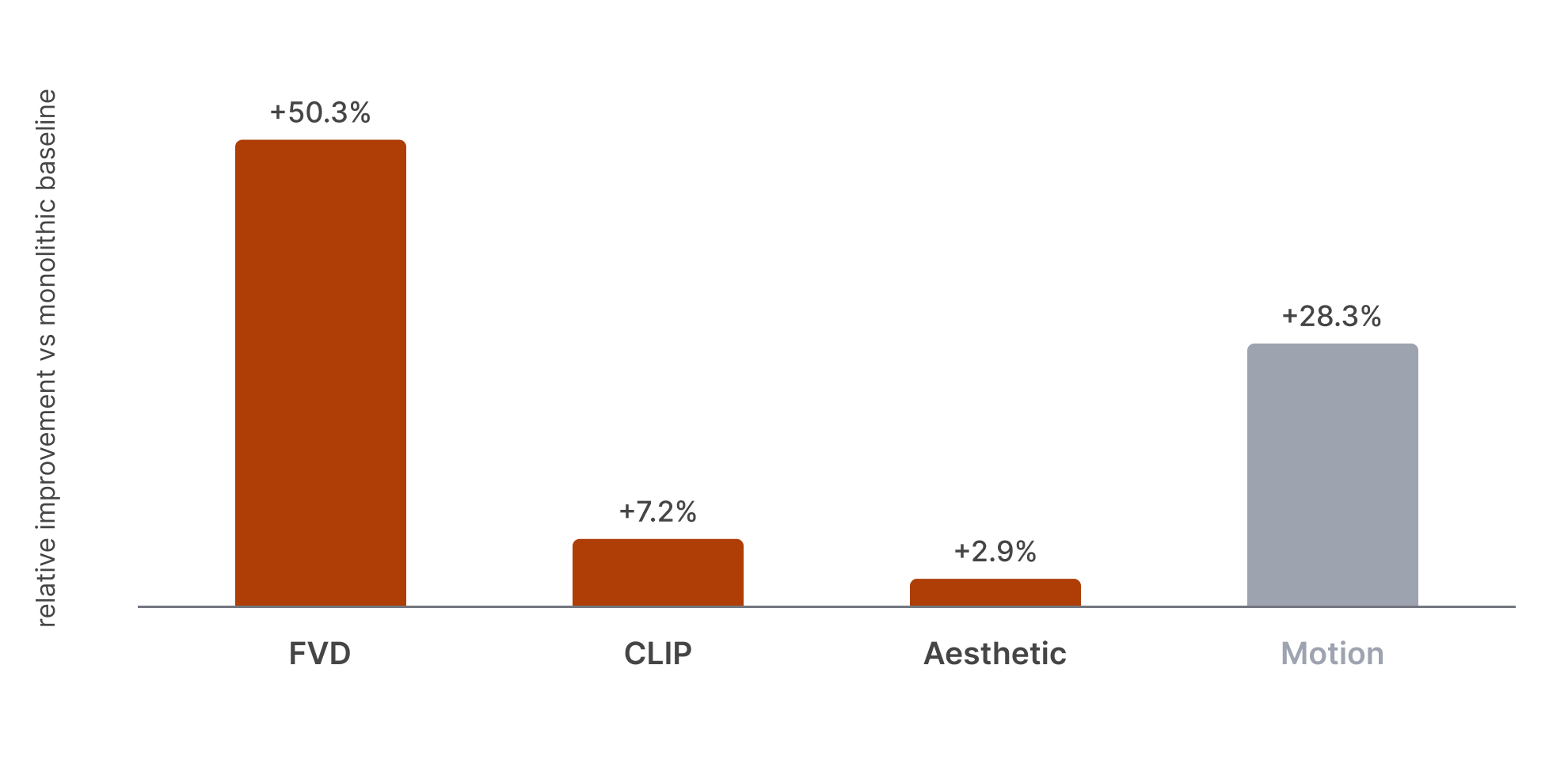
Relative improvement over the monolithic baseline. Each bar shows the gain over monolithic, so a taller bar means a larger improvement (for FVD this corresponds to a lower distance, for CLIP and aesthetic to a higher score). Motion is descriptive and has no preferred direction.
| Metric | Paris 2.0 DDM | Monolithic baseline | |---|---:|---:| | FVD ↓ | 279.01 | 561.04 | | CLIP text-video ↑ | 0.2178 ± 0.0012 | 0.2032 ± 0.0011 | | Aesthetic ↑ | 3.9036 ± 0.0082 | 3.7950 ± 0.0077 | | Motion (px/frame) | 0.712 ± 0.057 | 0.555 ± 0.043 | # Inference Pipeline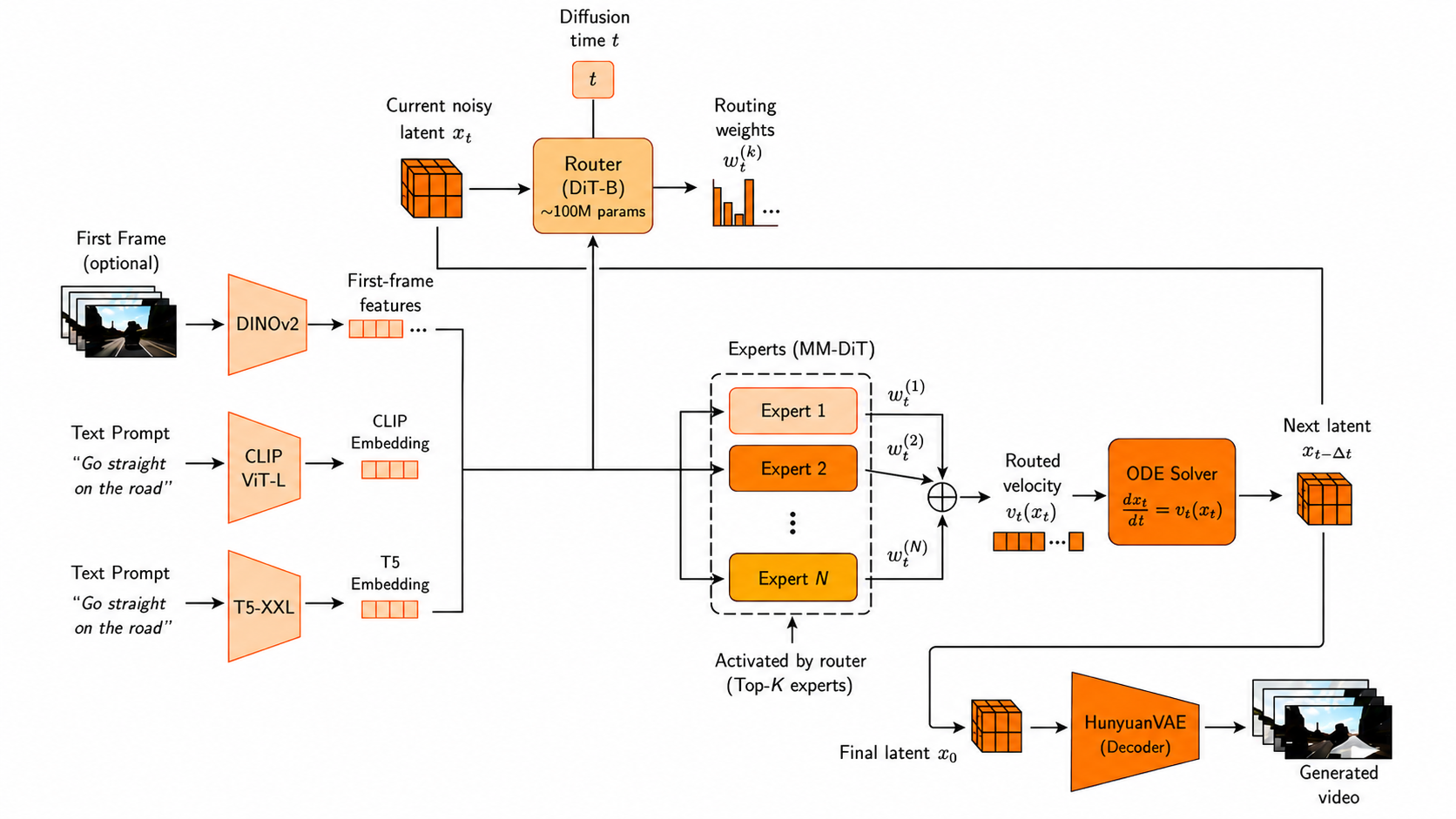
A lightweight router selects top-K Flux MM-DiT experts at each denoising step, and the routed velocity is decoded into video through HunyuanVAE.
# Key Characteristics - Three 11B Flux MM-DiT expert diffusion models - Lightweight router selecting experts during denoising - No gradient synchronization, parameter sharing, or activation exchange between experts during training - Supports text-to-video and image-to-video generation - Multi-stage checkpoints at 256×256 and 768×768 video resolutions --- # What This Repository Contains This repository contains the Paris 2.0 expert pool and learned router. Each expert includes Stage 2 and Stage 3 checkpoints for 256×256 and 768×768 video resolutions. ``` expert1/ Expert 1 expert2/ Expert 2 expert3/ Expert 3 Router/ Routing model model_index.json ``` Each checkpoint is provided in both unwrapped single-file (`master.safetensors`) and sharded (`model/`) formats for compatibility with different inference frameworks. --- # Required External Components Inference requires four third-party components that are **not bundled** in this repository. Each is released by its original authors under its own license, and you should fetch them directly from the upstream sources. After downloading, place them in the working directory alongside the contents of this repo using the layout below. ```bash # 1. Hunyuan Video VAE (Tencent) hf download tencent/HunyuanVideo hunyuan-video-t2v-720p/vae/pytorch_model.pt --local-dir ./hunyuan_vae mv ./hunyuan_vae/hunyuan-video-t2v-720p/vae/pytorch_model.pt ./vae.pt # 2. T5 text encoder, fp16, encoder-only (community-maintained Flux variant) hf download comfyanonymous/flux_text_encoders t5xxl_fp16.safetensors --local-dir ./t5 mv ./t5/t5xxl_fp16.safetensors ./t5/model.safetensors # 3. T5 tokenizer + config (Google) hf download google/t5-v1_1-xxl config.json spiece.model special_tokens_map.json tokenizer_config.json --local-dir ./t5 # 4. CLIP ViT-L/14 (OpenAI) hf download openai/clip-vit-large-patch14 --local-dir ./clip ``` Final layout after running the four commands above plus this repo: ``` . ├── expert1/ expert2/ expert3/ Router/ (this repo) ├── model_index.json (this repo) ├── vae.pt (Tencent HunyuanVideo) ├── t5/ (Google T5 + Flux encoder-only safetensors) └── clip/ (OpenAI CLIP) ``` ## Third-party components and licenses | Component | Upstream | License | |---|---|---| | Hunyuan Video VAE | [`tencent/HunyuanVideo`](https://huggingface.co/tencent/HunyuanVideo) | [Tencent Hunyuan Community License](https://huggingface.co/tencent/HunyuanVideo/blob/main/LICENSE.txt) | | T5 text encoder weights (encoder-only fp16) | [`comfyanonymous/flux_text_encoders`](https://huggingface.co/comfyanonymous/flux_text_encoders) | Apache 2.0 (derived from Google T5-v1.1) | | T5 tokenizer and config | [`google/t5-v1_1-xxl`](https://huggingface.co/google/t5-v1_1-xxl) | Apache 2.0 | | CLIP ViT-L/14 | [`openai/clip-vit-large-patch14`](https://huggingface.co/openai/clip-vit-large-patch14) | MIT | Use of each component is governed by its own upstream license. The license field on this repository applies only to the expert and router weights we trained. --- # Architecture Details | Component | Specification | |---|---| | Architecture | Flux MM-DiT | | Parameters per Expert | 11B | | Number of Experts | 3 | | Routing Model | Lightweight transformer router | | Text Conditioning | T5 + CLIP ViT-L/14 | | Video VAE | Hunyuan Video VAE (4× temporal, 8× spatial) | | Latent Resolution (stage 2) | 32×32 per frame | | Latent Resolution (stage 3) | 96×96 per frame | | Video Resolution (stage 2) | 256×256 | | Video Resolution (stage 3) | 768×768 | | Generation Modes | text-to-video, image-to-video | --- # Citation ```bibtex @misc{rouzbayani2026paris20decentralizeddiffusion, title={Paris 2.0: A Decentralized Diffusion Model for Video Generation}, author={Ali Rouzbayani and Bidhan Roy and Marcos Villagra and Zhiying Jiang}, year={2026}, eprint={2605.26064}, archivePrefix={arXiv}, primaryClass={cs.CV}, url={https://arxiv.org/abs/2605.26064}, } ``` --- # License MIT License – Open for research and commercial use. ---